


Even if you don't leave home, you are still at risk of contracting worms.Various types of worms can be found on household items, banknotes, cutlery, food and drinking water.
Parasites enter the body in a convenient way: they can enter the body through the digestive system through food, water, dirty hands, or insect bites.
Next, the worm infects certain internal organs, exploits the body's resources, causes mechanical damage and actively reproduces.Their course of life is accompanied by unpleasant and often dangerous symptoms and damage to various organs.
How to identify intestinal worms
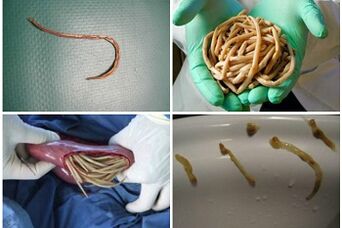
Intestinal helminthiasis includes a group of diseases caused by different types of worms.The most common ones are ascariasis (roundworms), pinworms (pinworms), and hookworms (hookworms).These parasites live in the human intestinal lumen, feeding on the intestinal contents, and their presence can be suspected by a number of characteristic symptoms:
- Lose significant weight without changing your diet and physical activity.Intestinal worms use the body's nutrients as a source of energy for growth and reproduction, and their fixtures in the intestine (suckers, hooks) damage the intestinal wall and interfere with the absorption of remaining trace elements.
- Stomach, navel pain, and rectal itching are caused by the movement of worms, the mechanical damage they cause, and the release of larvae or adult worms from the body into the external environment.
- Various digestive disorders: diarrhea or constipation, flatulence, presence of mucus, foam, or blood in stool, nausea, vomiting.In some cases, adult parasites can be found in the stool.
- The human body reacts to the presence of parasites with allergic reactions and poisoning caused by worm waste.More common are itching of the skin, redness in certain areas, rash (blisters, blisters of different sizes).
Diagnosis of intestinal helminthiasis includes stool examination, clinical and biochemical blood tests (eosinophilia, leukocytosis), and, if necessary, body ultrasound data.
signs of parasites in the liver
A large amount of nutrients accumulate in the human liver, and blood circulation is intensive, providing convenience for parasites.Common liver helminthoses: fascioliasis, opiodiasis, and difilariasis, caused by liver fluke worms.
They can be identified by specific signs:

- Severe pain in the right ribs is caused by the mechanical action of the worm.As a result, Echinococcus forms cysts in organ tissues, triggering inflammatory processes and even necrosis.
- The adult worms (roundworms) block the bile ducts, blocking the flow of bile, making the digestive process in the body difficult, and the patient develops symptoms of jaundice.A person's visible mucous membranes appear yellow, and as the pathology progresses, the skin also changes color.
- Non-specific symptoms of parasites are worsening of general physical condition, weight loss, nausea and lethargy.
To confirm the diagnosis, they donated blood for analysis.Leukocytosis, eosinophilia will be detected, and biochemical tests will show increased activity of liver enzymes (ALT, AST).During an ultrasound, liver damage in the body will be clearly visible: enlargement, inflammation and, in some cases, parasitic cysts.
What does the presence of lungworms mean?
Some parasites (roundworms, Toxoplasma gondii, Echinococcus, Acenur) can enter the human lungs from the gastrointestinal tract through the blood or lymph fluid.They multiply in the alveoli, causing breathing difficulties, and some species (unilocular Echinococcus) form cysts that destroy the structure of the organ.
Determining the presence of parasites in the lungs can be difficult because symptoms are similar to those of viruses and non-infectious respiratory illnesses (bronchitis, ARVI).Cough, difficulty breathing, chest pain, and elevated temperature indicate the need for additional physical examination of the patient.
For the diagnosis of lungworm disease, the most informative method is the radiographic method.The photographs will show human lesions caused by Echinococcus (cysts) and Taenia bovis (fibrous structures), which then need to be distinguished from tumors, cysts of various etiologies, and pneumonia.
Parasites that live in the blood
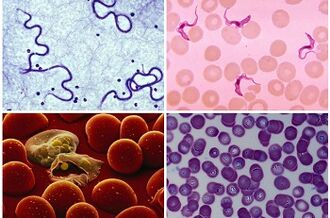
Protozoan single-celled worms can be found within the lumen of blood vessels.Babesia, Plasmodium, Trypanosomatids, Microfilariae and Schistosoma cause dangerous diseases that pose a threat to human life.
By destroying formed components, they disrupt energy metabolism processes in the body and prevent the flow of nutrients to organs and tissues.
In most cases, human infection occurs after an insect or tick bite.After a while, symptoms of anemia appear in the body: paleness, then cyanosis of the mucous membranes, dizziness, sudden weight loss and deterioration of health.Without prompt medical care, blood parasites can pose a serious threat to human life.
Diagnosis involves microscopic blood testing, during which single-cell parasites and destroyed red blood cells can be found and the type of worm can be determined.Treatment is long-term and occurs in hospital under the supervision of a qualified physician.
Unusual habitat for parasites
Certain types of worms can penetrate the human heart, subcutaneous tissue (dirofilaria), brain, and spinal cord (cysticercosis, echinococcosis).Not only can you become infected in a foreign country, you can also become infected by eating familiar foods that are not cooked properly, and pets can also be carriers.Signs of invasion depend on the extent of damage to specific organs.
In the brain, worms can form cysts and fibrous structures that cause neurological phenomena.
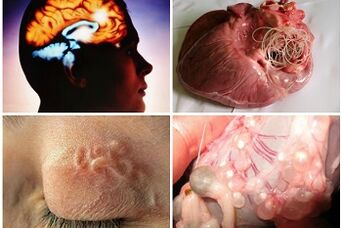
Unexplained headaches, tremors (tremors) in the limbs, changes in touch sensitivity, impaired motor coordination, dramatic deterioration in hearing and vision - signs of the development of an invasion depend on the location of the worms and their larvae.
Adult parasites can be found visually under the skin, often with itching and stinging, and can also be found in the eyes, ear canals, and other places.
What to do if you see signs of worm infection
After carrying out all necessary examinations and determining the type of parasite, parasitic diseases are treated under the supervision of a doctor.Prescribing narrow or broad spectrum anthelmintics and general intensive and symptomatic treatment will help clear the worms from the body.In some cases, surgery is required.
With timely initiation of treatment, the prognosis for most diseases is good.If you put off seeing a doctor or start taking medications on your own, the recovery process can be delayed, and many types of parasites can damage vital organs or body systems and even cause death.